
DO YOU WANT TO MAKE UP LIKE A PRO? LEARN THE BASICS


Knowing how to apply makeup can be a bit overwhelming to beginners. The good thing is that you can wipe it off if you don't like it.
Makeup is something that takes time to master and even professionals have to constantly practice and study to improve their skill.
Here are some pro tutorials that would up your makeup game to the next level.

1. Colour theory - It is the benchmark for good makeup approach. Oftentimes we use wrong colors and undertones for our skin. To makeup like a pro, you have to master color theory until you are perfect in color mixing especially as a beginner.
If you have a red pimple, green toned concealer works better in concealing being that they are opposite colors. Take into consideration, your skin undertone and eye color so you use colors that works best with them.

2. Foundation and concealer - As a professional, applying foundation or concealer depends on necessity. In applying a foundation, color matching  and even application is key to create an impeccable finish. A perfect match in foundation is one that disappears into the skin.
When applying concealer such as Tara pro concealer at the under eye area, don't pile it up at once because it would crease and cake.
Apply a thin layer of concealer , if its not enough, add another thin layer. Afterwards, set with a translucent setting powder.

3. Blush - It has a way of giving your face a healthy look, taking away dullness, so its vital to know how and where to apply it. Apply the blush more along the outer part of the cheek area above where you would normally contour.

4. Setting powder in between primer and foundation -  This method is one way for your makeup to last all day. It's weird but it works. Apply your face primer and dust a translucent powder over it such as Tara sheer finish powder.
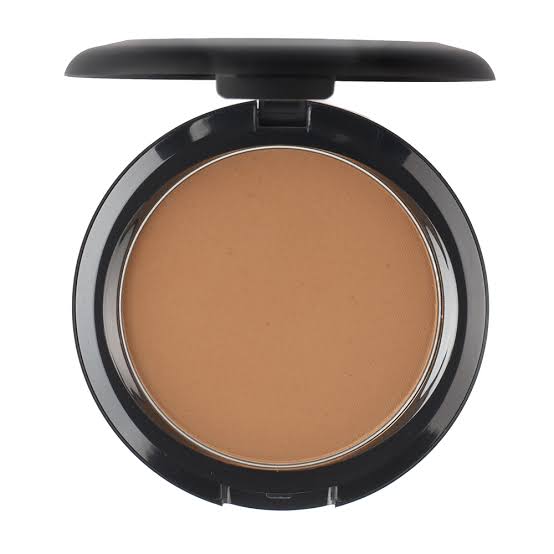
By doing this, you are locking it in ensuring the primer won't glide when applying the foundation.
Don't apply too much setting powder to avoid a cakey effect.

5. Contouring - This usually means sculpting and  highlighting. Sculpting is creating shadows to the areas of the face you want to recede. Highlighting is when you pull areas on your face that you want to focus on.
For natural contouring, cream products are best but powder contouring products appear more conspicuous which makes it ideal for events and photo shoots.
Blending is key when it comes to contouring. Everything should look picture perfect so whatever you do, make sure there is no visible lines on your face.


6. Beauty blender - Use this makeup sponge damp when applying your foundation for a seamless application.
It ensures that makeup never looks dense.

7. Eyebrows - You begin to line your brows where the inner corner of your eyes start. You can fade the products towards the nose area. The perfect way to create a natural looking brow is to use small angled brush or slim brow pencil such as Tara Brown pencil or Tara angled brush to create thin strokes in the same direction your brow hair grows. Apparently, the application would be darker the first time you apply the brow product so always start with the arch area.
No worries if they don't appear the same, your brows aren't twins.

For sparse brows and lashes; applying castor oil is a natural and effective way of growing them out. It's rich in omega-9 fatty acid which helps to nourish and grow the brows or lashes. Apply every night to your brows or lashes using mascara wand or cotton swabs.

I hope these tips will help you apply makeup like a pro. Keep practicing because mastery takes time.

Share your thoughts in the comment section below and don't forget to subscribe.

Thanks for reading!
X O X O

Comments

Popular posts from this blog

DIFFERENCES BETWEEN A TALENT, A SKILL AND A GIFT

Talents are natural and can be attributed to the natural genetic factors existing within us passed down from generation to generation. It is propagated naturally at birth. Talents and skills are often misconceived in conversations. Although both pertains to the ability of an individual to perform a particular task. A talent is permanent or naturally occurring in a person. It is said to be a special ability with experience or a specific tutoring. It is the ability to carry out a task without extra effort but yet perfect in enactment. Some people have it while some don't. A talent can be improved overtime with direction and training. A skill is an ability that is learned and practiced over a period of time. It is acquired or obtained as an outcome of perpetual improvement and performance on a given task. Skills are taught and regarded as a displayed talent unlike a talent which is a natural procurement of an ability. In other words, a skill is a result of a person'...

BENEFITS OF DATES (DABINO)

Do we all know what a date is? Date, locally known as Dabino in Hausa is from the date palm tree, a flowering plant specie in the palm family Arecaceae, cultivated for it's edible sweet fruit. Date trees reach about 69-75ft in height growing individually with several stem from a single root system. Date fruits are oval, ranging from bright red to bright yellow in color . They are sweet containing about 7.5 percent of sugar when dried. Dates are healthy but only in moderation. They're high in sugar and calories; so eating too many can result in weight gain. If you're trying to lose weight, avoid dates and stick to other fruits and vegetables. Dates are chewy with a sweet flavor. They are also high in some important nutrients and have a variety of advantages and uses. BENEFITS Their calorie content is higher than most fresh fruit since its dried. Despite their calories, dates contain some important vitamins, minerals and a significant amount of fiber. Most of the ...

HEALTH AND SKIN BENEFITS OF SUGARCANE - FACTS ABOUT SUGARCANE

Sugarcane are several species of tall perennial true grasses of the genus Saccharum, tribe Andropogoneae, native to warm temperate tropical regions of south and southeast Asia. Its jointed fibrous stalks are rich in sugar sucrose. Sugarcane belongs to the grass family. It's the world largest crop by production quantity with 1.9 billion tonnes produced in 2016. Sugarcane accounts for 80% of sugar produced, most of the rest is made from sugar beets; a plant grown commercially for sugar production. In some regions, people use sugarcane reeds to make pens and mats. In 18th century AD, sugarcane plantations began in Caribbean, South America, Indian Ocean and Pacific Island nations. A sugarcane crop is sensitive to the climate, soil type, irrigation, fertilizers, insects and disease control. Sugarcane has no fats. It has 20 grams of natural sugar. A mature sugarcane plant can grow up to 30 feet tall. A single sugarcane plant can take 9-24 months to become mature depending on climat...